


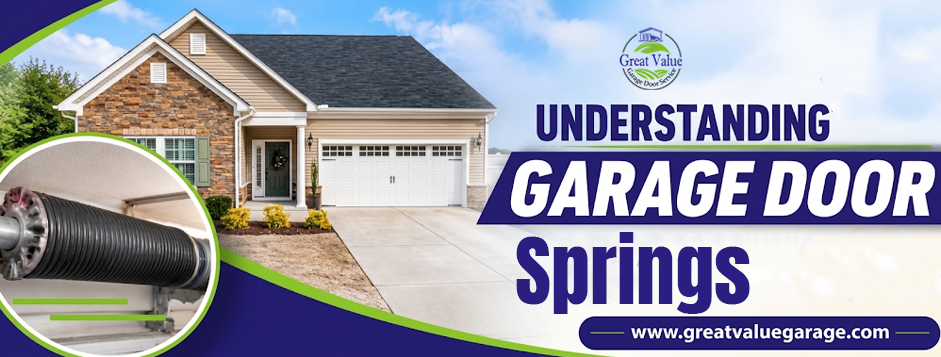
Garage door springs are among the most important components in a garage door system. They counterbalance the weight of the door, making it possible for the opener or a person to move it without handling the full weight of the door.
Because springs operate under significant tension, they also require careful inspection and proper handling. A worn or broken garage door spring can affect the way the door opens, closes, and stays balanced. In some cases, continued use can place additional strain on other components.
Understanding the different types of garage door springs, how long they typically last, and the warning signs of failure can help homeowners recognise problems before they become more serious.
What Does a Garage Door Spring Do?
A garage door can weigh hundreds of pounds, depending on its size, construction, and materials. The springs help counterbalance that weight so the door can move along its tracks with less force.
When the door closes, the springs store energy. When the door opens, that stored energy assists with lifting the door. The garage door opener controls the movement, but it does not replace the balancing function of the springs.
A properly functioning spring system helps the door remain balanced throughout its travel. If the spring loses tension or breaks, the door can become difficult to lift, move unevenly, or fail to stay open.
Garage door springs also work together with other components, including cables, drums, rollers, tracks, hinges, and the opener. A problem with one part can affect the operation of the entire system.
Main Types of Garage Door Springs
Most residential garage doors use one of two primary spring systems: torsion springs or extension springs. Although both perform the same basic function, they operate differently and are installed in different positions.
Torsion Springs
Torsion springs are mounted horizontally above the garage door opening. They are attached to a shaft and use twisting force to store and release energy as the door moves.
As the door closes, the spring winds and stores energy. When the door opens, the spring unwinds and helps lift the door.
Torsion systems are widely used on residential garage doors because they provide controlled movement and can offer good balance when correctly sized and maintained.
Some larger or heavier doors use multiple torsion springs rather than a single spring. The number and configuration depend on the door’s weight and design.
A torsion spring can remain under substantial tension even when the garage door is closed. For this reason, spring adjustment, removal, and replacement should be handled by a trained professional with the correct tools.
Extension Springs
Extension springs are positioned along the horizontal tracks on either side of the garage door. Instead of twisting around a shaft, they stretch and contract as the door moves.
When the door closes, the springs extend and store energy. When the door opens, that energy assists with lifting the door.
Extension spring systems commonly use safety cables. These cables help contain the spring if it breaks, reducing the chance that the spring itself will move unpredictably.
Because extension springs extend under load, they also require proper installation and inspection. A damaged spring, cable, bracket, or track can affect the operation of the system.
Torsion Springs vs. Extension Springs
| Feature | Torsion Springs | Extension Springs |
| Typical location | Above the garage door | Along the horizontal tracks |
| How energy is stored | Twisting action | Stretching action |
| Common use | Residential and larger door systems | Many residential systems |
| Movement | Rotational | Expansion and contraction |
| Safety considerations | High tension around the shaft | High tension along the tracks |
| Maintenance | Requires professional inspection | Requires inspection of springs and safety cables |
The appropriate spring type depends on the garage door’s design, weight, dimensions, and existing hardware. Replacing one system with another is not simply a matter of choosing a different spring. The entire system must be compatible with the door.
How Long Do Garage Door Springs Last?
Garage door spring lifespan is usually measured in cycles rather than years.
One cycle generally means the garage door opens and closes once. Manufacturers may rate springs for a certain number of cycles, with common residential ratings often ranging from approximately 10,000 to 20,000 cycles. Higher-cycle springs are also available.
The actual service life depends on how frequently the door is used and the conditions in which the spring operates.
For example, a household that opens its garage door several times every day will use its springs more frequently than a household that only operates the door once or twice daily.
Other factors can affect lifespan, including:
- Door weight
- Spring quality
- Correct spring sizing
- Humidity and environmental conditions
- Rust and corrosion
- Installation quality
- Frequency of use
- Overall garage door maintenance
A spring that has reached the end of its expected cycle life may not show obvious damage beforehand. Regular inspection can help identify wear before the spring fails.
Signs of a Worn or Failing Garage Door Spring
A garage door spring does not always fail without warning. Changes in the way the door operates can indicate that the spring system needs attention.
The Door Feels Heavier
If you manually lift the garage door and it suddenly feels much heavier than usual, the springs may no longer be providing adequate counterbalance.
Do not continue forcing the door upward if it feels unusually heavy. A professional should inspect the spring system and other components.
The Door Opens Unevenly
A door that rises unevenly or appears lower on one side can indicate a spring, cable, or balance problem.
Uneven movement should not be ignored because continued operation can place additional stress on the tracks and other hardware.
The Door Slams Shut
A properly balanced garage door should move in a controlled manner. If it drops rapidly or slams shut, the spring system may not be providing the necessary support.
This can create a safety concern and should be inspected promptly.
You Hear a Loud Bang
A broken spring can produce a loud popping or banging sound when it releases its stored energy. Homeowners sometimes mistake this sound for something falling inside the garage.
If you hear a sudden loud bang and the door subsequently becomes difficult or impossible to open, inspect the door visually from a safe position and arrange for professional service.
There Is a Visible Gap in the Spring
With a torsion spring, a visible separation or gap in the coils can indicate that the spring has broken.
Do not touch the spring or attempt to reconnect it. The spring may still contain stored energy.
The Garage Door Will Not Open
When a spring breaks, the opener may not be able to lift the door because the system has lost its counterbalance.
Trying to force the opener to lift a door with a broken spring can place additional stress on the opener and other components.
What Causes Garage Door Springs to Break?
Normal wear is one of the main reasons springs eventually fail. Every opening and closing cycle places stress on the metal. Over thousands of cycles, the spring can lose its ability to provide the required force.
Corrosion can also contribute to premature wear. Rust can affect the surface of the spring and change its performance over time.
Incorrect spring sizing is another concern. A spring needs to be properly matched to the weight and configuration of the garage door. Using an unsuitable spring can affect balance and operation.
Other garage door components can contribute to spring problems. Damaged cables, worn rollers, poor alignment, and track issues may increase the load placed on the system.
Garage Door Spring Safety Tips
Garage door springs should not be treated like ordinary hardware. They store mechanical energy and can cause serious injuries if they are handled incorrectly.
Do Not Attempt Spring Replacement Without Proper Training
Replacing or adjusting a garage door spring involves working with stored tension. The wrong tool, incorrect procedure, or unexpected movement can result in serious injury.
Professional technicians use appropriate equipment and procedures for spring work.
Keep People Away From a Damaged Door
If a spring breaks, keep children, pets, and other people away from the garage door until it has been inspected.
A damaged door may be unstable, particularly if the spring system is no longer balancing its weight.
Do Not Force the Garage Door
Avoid repeatedly operating an automatic opener when the door is unusually heavy, stuck, or visibly damaged.
The opener is designed to move a properly functioning door. Continuing to operate a damaged system can place unnecessary strain on the motor, drive components, cables, and other hardware.
Pay Attention to Unusual Sounds
Grinding, popping, squeaking, or snapping sounds can indicate problems with the spring system or another part of the door.
Not every noise means a spring is failing, but persistent or sudden changes in sound deserve inspection.
Schedule Professional Inspection
A professional can examine the springs along with the cables, drums, rollers, hinges, tracks, brackets, and opener.
Looking at the spring alone may not reveal the cause of an operating problem. The entire system needs to work together correctly.
Can You Prevent Garage Door Spring Failure?
No spring lasts indefinitely, but proper maintenance can help identify problems early and reduce unnecessary stress on the system.
Keep the tracks clear of obstructions and pay attention to changes in door movement. Periodic professional inspections can also identify worn components before they affect other parts of the system.
Lubrication may be appropriate for certain garage door components, but homeowners should follow the recommendations for their specific door and hardware. Lubricant should not be used as a substitute for repairing a damaged spring or other faulty component.
If a spring has reached the end of its service life, replacement is generally necessary. Installing a new spring that is correctly matched to the door is important for proper balance and operation.
What Happens During Professional Spring Replacement?
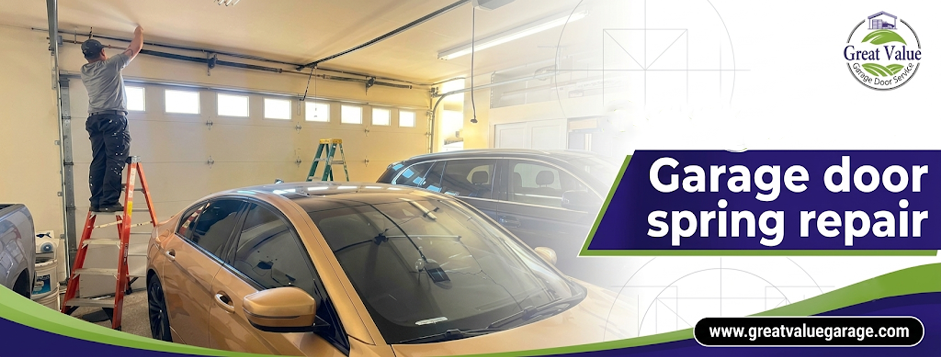
A professional spring service normally begins with an inspection of the garage door and its hardware. The technician identifies the spring type, examines its condition, and checks related components that may have contributed to the problem.
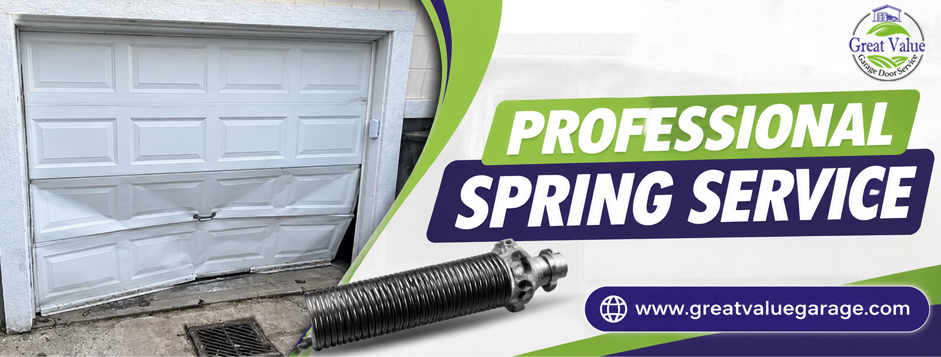
The damaged spring is then removed using appropriate tools and safety procedures. The replacement spring must be correctly selected for the door’s weight and configuration.
After installation, the technician checks the balance and movement of the door. Other components, such as cables, rollers, tracks, and the opener, may also be inspected for signs of damage or excessive wear.
The door should be tested through its normal operating range before the service is considered complete.
This process matters because replacing a spring without checking the rest of the system may leave an underlying problem unresolved.
Why Correct Spring Sizing Matters
Garage door springs are not interchangeable simply because they look similar.
A spring’s dimensions, wire size, length, inside diameter, and other characteristics affect the amount of force it can provide. The replacement must be suitable for the specific garage door.
An incorrectly sized spring can affect balance and may cause the door to become too heavy, too difficult to control, or improperly balanced.
For this reason, spring selection should be based on the actual garage door system rather than appearance alone.
When Should You Call a Garage Door Professional?
Professional service is appropriate when a spring is broken, visibly damaged, excessively rusty, stretched, or showing other signs of failure.
You should also arrange an inspection if the garage door suddenly becomes heavy, opens unevenly, slams shut, stops halfway, or makes unusual sounds.
If a spring has broken, avoid attempting to open or repair the door yourself. A garage door can weigh hundreds of pounds, and the spring system is designed to counterbalance that weight.
A qualified technician can determine whether the problem is limited to the spring or whether other components also require attention.
Garage Door Spring Service From Great Value Garage Door
At Great Value Garage Door, we provide garage door spring inspection and replacement services for homeowners in Tacoma and nearby areas. Our approach starts with assessing the spring and the surrounding garage door system rather than replacing a component without checking the cause of the problem.
We inspect the springs, cables, rollers, tracks, and other relevant hardware to identify signs of wear or damage. When replacement is required, we use springs selected to suit the garage door system. We also test the door after service to check its movement and operation.
Because garage door springs operate under high tension, we take appropriate safety precautions during inspection and replacement. If your garage door has become unusually heavy, will not open, is sitting unevenly, or has a visibly broken spring, our team can assess the system and explain the required repair before work begins.
Conclusion
Garage door springs perform a critical balancing function, but they are also components that operate under significant mechanical tension. Torsion and extension springs use different mechanisms, yet both require correct sizing, installation, and maintenance.
Knowing the warning signs of spring failure can help homeowners respond before a minor operating change becomes a larger garage door problem. Unusual heaviness, uneven movement, loud noises, a visible gap in a torsion spring, or a door that will not open are all reasons to arrange a professional inspection.
When a garage door spring breaks, avoid forcing the door or attempting a replacement without the appropriate training and equipment. Professional inspection can help identify the failed component, check the rest of the system, and restore the door to proper operation safely.
Frequently Asked Questions
1. How long do garage door springs typically last?
Most residential garage door springs are rated for around 10,000 to 20,000 operating cycles. Actual lifespan depends on usage frequency, spring quality, door weight, installation, and environmental conditions.
2. What are the main types of garage door springs?
The two main types are torsion springs and extension springs. Torsion springs are mounted above the garage door and twist to store energy, while extension springs are positioned along the horizontal tracks and stretch as the door operates.
3. How can I tell if my garage door spring is broken?
Common signs include a door that feels unusually heavy, will not open, opens unevenly, slams shut, or makes a loud popping sound. A visible gap in a torsion spring can also indicate that it has broken.
4. Is it safe to replace a garage door spring myself?
Garage door springs store significant mechanical energy and can cause serious injury if handled incorrectly. Spring replacement and adjustment should be performed by a trained professional using the appropriate tools and safety procedures.
5. What should I do if my garage door spring breaks?
Stop using the garage door and keep people away from the damaged system. Do not attempt to force the door open or repair the spring yourself. Contact a qualified garage door technician to inspect the spring and related components.